Legionella gets the headlines, but Pseudomonas could be the hidden threat lurking in your system. Are you prepared?
In water safety circles, Legionella rightly takes centre stage. But it’s not the only threat that can be lurking in your system, undetected. Pseudomonas Aeruginosa is less discussed, more challenging to eliminate, and just as capable of compromising health and infrastructure.
So what happens when it turns up somewhere it shouldn’t - in a system that’s low-risk on paper? That's precisely what happened at The Nazareth Heritage Museum.

For any queries and questions about this post, please contact us.
Blog Archive
The Heritage Centre is a charming, single-storey museum equipped with a straightforward water system: mains-fed with point-of-use heaters - low risk on paper.
From a Legionella risk management perspective, it’s considered low-risk, with minimal stored hot water and regular use, meaning in no red flags on paper.
However, when staff noticed a strange taste in the tap water, they decided to investigate.
Routine microbiological sampling was carried out. Legionella and general bacteria levels came back clear. But one result raised concern: The results came back positive for Pseudomonas Aeruginosa.
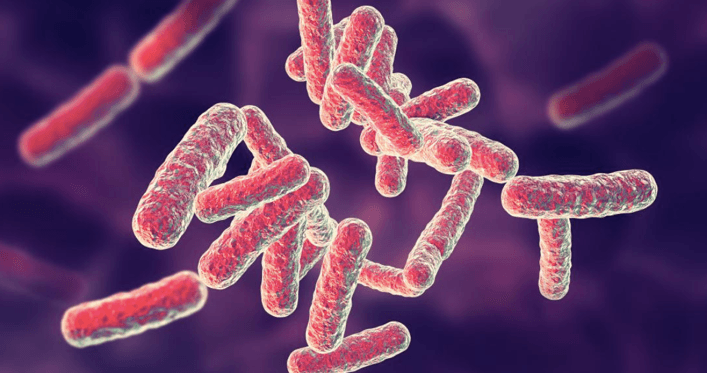
What Is Pseudomonas Aeruginosa - and Why Does It Matter?
Unlike Legionella, Pseudomonas is not often discussed in everyday water safety reviews - but it should be.
It thrives in moist environments, clings to pipework in the form of biofilm, and is notoriously hard to remove.
It poses a real health risk (giving rise to conditions such as chest infections, pneumonia, and UTIs) and can compromise system efficiency through corrosion and blockages.
Most importantly? It should not be present in a regularly used, mains-fed water system.
Pictured left: Pseudomonas, a stubborn biofilm that can poses a health risk and can damage water systems
The Challenge
The presence of Pseudomonas in this type of system that was so often in use was unexpected and problematic.
Naturally, the customer wanted the bacteria eliminated, and measures put in place to ensure it didn’t return.
While Huwa-San TR-50 is typically our go-to treatment for most microbiological water issues, Pseudomonas presents a unique challenge.
This resilient bacterium produces significantly more catalase, an enzyme that breaks down hydrogen peroxide (the active component in Huwa-San) much faster than Legionella.
As a result, a more strategic and targeted approach was required.
The Solution: Targeted Dosing with Huwa-San TR-3
We recommended and carried out a disinfection protocol using Huwa-San TR-3. Here’s what we did:
For the initial disinfection, we:
Installed a dosing point on the mains supply where we could inject Huwa-San TR-3 to until a 500ppm concentration was achieved.
Once a 500ppm concentration was acheived, the disinfectant was held in the system for 24 hours.
Flushed the system following the 24-hour contact time.
Five days following the initial disinfection, testing revealed that some Pseudomonas remained, as expected when dealing with stubborn biofilms.
A second treatment was carried out one week later. This time, the results came back clear.
Due to the installation of a dosing point on the mains supply, follow-up disinfections were straightforward and performed at three-monthly intervals as a preventive measure.
The system remained clear.
Why Huwa-San?
Independent testing by Eurofins showed that Huwa-San achieves >4 log reduction of Pseudomonas Aeruginosa in biofilms at 500ppm with a 24-hour contact time.
That’s not just disinfection; that’s biofilm inactivation.
Traditional disinfection methods (using chlorine) often fall short against biofilm. Huwa-San, however, penetrates biofilms, breaks them down, and provides long-lasting microbial control, all without the harsh corrosive effects of more aggressive chemicals.

Outcome
The Heritage Centre now has:
• A clear water system
• A proactive ongoing disinfection protocol
• Confidence in water safety - backed by data
Final Thoughts
This case is a reminder that even low-risk systems can harbour hidden risks, and that having a reliable, biofilm-effective disinfectant like Huwa-San TR-3 is crucial for peace of mind.
To ensure robust protection against biofilm-forming pathogens in your water systems, please contact us to discuss how Huwa-San TR-3 can assist:


